9+ curated guides • Updated October 2025
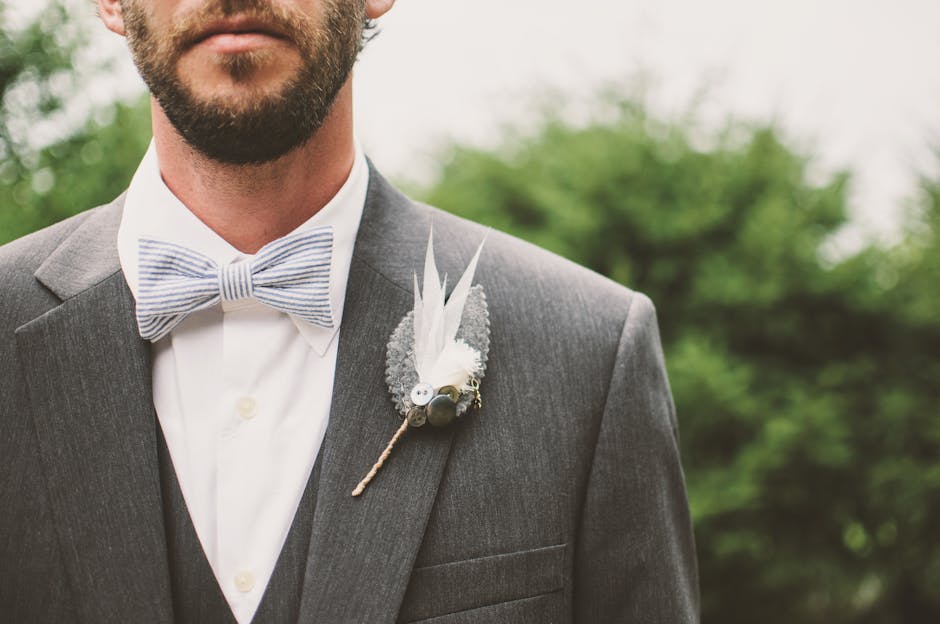
That breathtaking marriage jewellery set is the centerpiece of your bridal look, a treasure you've dreamed of. But what happens after the ceremonies end and it's relegated to a velvet-lined box? We're challenging the 'one-day wonder' myth by revealing how to select a stunning bridal set designed not just for the aisle, but for anniversaries, milestones, and every beautiful moment thereafter. The truly discerning bride understands that her wedding jewellery is not a costume for a single performance, but the foundational chapter of a lifelong collection. It’s about commissioning pieces with inherent intelligence and versatility, ensuring the story of your union is woven into the fabric of your future style.
You've scrolled through a thousand identical gold-plated hoops and mass-produced beaded bracelets, feeling nothing. What if the most compelling accessory wasn't the one that followed a trend, but the one that carried a story? This guide isn't just a list of stores; it's a curated collection of portals to pieces with provenance, soul, and a history waiting to be worn. As a style anthropologist, I've observed that we've been conditioned to see accessories as disposable punctuation marks to an outfit. But their true power lies in their ability to be anchors—to a memory, a place, a person, or a craft. This guide bypasses the digital noise of fast fashion to spotlight nine archetypes of retailers who treat their collections not as inventory, but as a museum of wearable art. Here, you won't find what's 'in'; you'll find what lasts.
Pinning a brooch to your coat lapel is a classic choice. It's also the most predictable one. We're moving beyond the obvious to treat your outerwear like a canvas, applying the principles of visual design and composition to transform your entire look with a single, perfectly placed pin. Forget seeing a brooch as a mere accessory; it is a punctuation mark, a focal point, and the architectural detail that provides structure to your sartorial statement. This guide will deconstruct the art of placement, transforming your approach from a simple act of decoration into a deliberate, impactful design choice.
You're scrolling through your feed when a post from your favorite, long-departed musician pops up, announcing a new line of merchandise. It feels both comforting and deeply strange—a ghost in the machine selling t-shirts. This is the new reality of celebrity death, where a passing is no longer the end of a personal brand, but the beginning of a complex and controversial digital afterlife. These accounts are not dormant memorials; they are active, curated, and highly strategic media properties. Managed by a new class of digital undertakers—estate managers, social media firms, and record labels—these profiles walk a razor-thin line between honoring a legacy and exploiting it. This burgeoning industry forces us to confront uncomfortable questions about ownership, authenticity, and the very nature of identity in an age where our digital echoes can outlive us, and even be put to work.
You see them coiled by the checkout counter or hung on a designated 'accessory wall,' seemingly as an afterthought. But the humble belt is the unsung hero of retail economics. This isn't just a guide to a functional accessory; it's an exposé on the most profitable square foot in the entire clothing store. For years, I was on the inside, a merchandiser who decided where every mannequin, every rack, and every tiny accessory would live. While everyone focused on the seasonal denim wall or the new shipment of sweaters, my colleagues and I knew the real money was being made elsewhere. It was in the simple, unassuming loop of leather or fabric designed to hold up your pants. We didn't just sell belts; we weaponized them for profit. This is the story of how that happens.
When the news of a beloved celebrity's death breaks, the tributes are immediate. But in our hyper-connected age, a second, more complex reality emerges: what happens to their digital ghost? This isn't just about their last post, but about the strange new frontier of digital estates, posthumous influence, and the unsettling questions surrounding a legacy that never truly logs off. We are moving beyond simple memorialization into an era of active, posthumous brand management. The profiles of the dead are no longer static monuments but evolving, interactive archives managed by a new class of professional: the spectral curator. This article pulls back the curtain on the fascinating and ethically fraught industry dedicated to keeping celebrity ghosts in the machine.
Think of Darth Vader's menacing leather, Audrey Hepburn's elegant opera gloves, or Ryan Gosling's iconic driving gloves in 'Drive'. This isn't just costuming; it's character. We'll explore why this single accessory is the most potent, unspoken piece of storytelling in a filmmaker's arsenal, revealing more than any line of dialogue ever could. Long before a character utters their first line, their hands—or rather, what covers them—have already told us who they are, what they hide, and what they're capable of. Gloves are the ultimate narrative shorthand, a silent monologue delivered through fabric and leather.
The conversation around AI-generated deepfakes focuses on the violation of the subject, and for good reason. But what about the other person in the equation: the viewer? This isn't a victimless act of consumption—it's an active participation in a phenomenon that quietly rewires our neural pathways for empathy, consent, and our very perception of truth. Every click, every view, every moment spent observing a synthetic, non-consensual depiction of a real person is a micro-dose of a powerful neurotoxin. It doesn't just entertain or shock; it fundamentally alters the cognitive architecture we use to relate to one another. We are training our brains to accept a reality where human identity is a malleable commodity, and in doing so, we are introducing a critical bug into our own social programming: the empathy glitch.
Remember the bags everyone had to have in 2022? From vibrant mini bags to oversized carryalls, the year was full of must-have styles. But now that the dust has settled, we're asking the real question: which of those coveted bags were a fleeting trend, and which were actually a brilliant addition to your wardrobe's investment portfolio? As a market analyst, I don't see handbags as mere accessories; I see them as assets with measurable performance. This report moves beyond aesthetics to conduct a financial post-mortem on the most coveted styles of 2022, separating the blue-chip assets from the speculative bubbles.